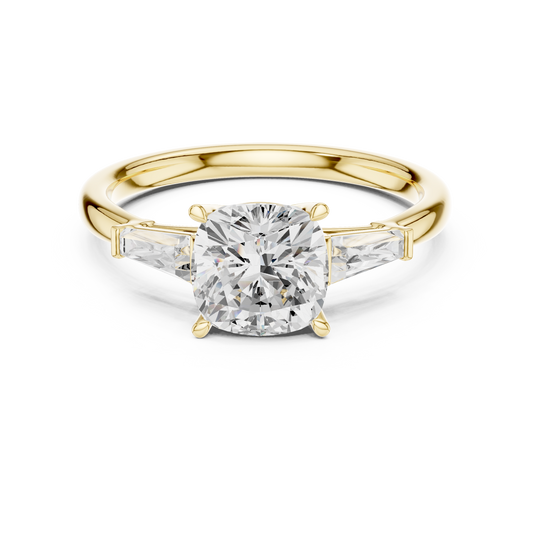
There's a reason the solitaire has outlasted every trend cycle in fine jewelry. One diamond, one band, nothing else competing for the eye. Simplicity is the hardest thing to design well, and the easiest thing to wear well. A solitaire diamond engagement ring does not hide behind detail. It has to earn its beauty through proportion and cut alone, which is exactly why it still outsells nearly every other style in this collection.
Why the Solitaire Endures
A solitaire engagement ring works because it gets out of its own way. The setting exists to hold the stone, not to compete with it, so every bit of light that hits the ring goes straight into the diamond. That's part of why solitaires photograph so well and age so gracefully. There's no pavé to lose sparkle over time and no intricate metalwork to catch on a sweater. Just a diamond, doing what a diamond does best.
It's also the ring worth recommending to someone who is not entirely sure what "her style" is yet. A classic solitaire engagement ring rarely misses. It reads as intentional on a minimalist and elegant on someone who layers her jewelry daily.
Choosing a Diamond Shape
The shape you choose changes the entire character of a diamond solitaire engagement ring, even though the setting itself stays simple.
A round solitaire engagement ring remains the most requested shape in this collection, and it earns that position honestly. The round brilliant cut is engineered for maximum light return, which means it reads bright and lively from across a room, not just up close.
If she wants something with a bit more presence on the finger, an oval solitaire engagement ring is worth a close look. The elongated outline creates the appearance of a larger stone at the same carat weight, and it flatters almost every hand shape, which is why it's become the second most popular pick here.
For a more architectural take, our emerald cut engagement rings bring step-cut facets into the solitaire format, trading scattered sparkle for wide, clean planes of light. It's a quieter kind of elegance that tends to appeal to women who already gravitate toward structured, tailored style elsewhere in their wardrobe.
Cushion cut solitaire engagement rings sit somewhere between the two. Soft, rounded corners give them warmth, while the deeper facets underneath still deliver real brilliance. If she loves antique-inspired pieces but does not want a fully vintage setting, the cushion is often the shape that bridges both instincts.
You will find the full range, including round and additional shapes, across our shape collections if you want to compare side by side before deciding.
Metal Choices for a Solitaire Setting
A gold solitaire engagement ring in 14K or 18K yellow gold remains the most requested option here, and it's easy to see why. Yellow gold warms against nearly every skin tone and only deepens in character with age, which suits a ring meant to be worn every single day. White gold offers a cooler, more diamond-forward finish that lets a colorless stone read even brighter, while rose gold brings a softer, romantic quality that pairs especially well with oval and cushion centers. All three metals are available across this collection, so the decision comes down to preference rather than availability.
Living With a Solitaire Every Day
One of the quiet advantages of a solitaire is how little it asks of you. Fewer prongs and less intricate detail mean fewer places for lotion, dust, or wear to build up, so upkeep stays simple compared to a halo or three stone setting. A quick clean every few weeks and an annual prong check will keep the diamond sitting securely and catching light the way it should.
If a solitaire feels too understated for her taste, our halo and vintage collections build on the same foundation with more detail around the band, and our statement rings go further still for someone who wants the ring itself to make an impression.
A Simple Way to Decide
Start with the shape she'd choose if nothing else mattered, then let the metal follow her existing jewelry. That's the whole decision, really. A solitaire's appeal is that it does not require an elaborate process, and once shape and metal are settled, the ring has essentially chosen itself.
Every solitaire in this collection is crafted for daily wear, in premium metals, with settings built to hold the stone securely for years of everyday use.
FAQs
1. What makes a ring a solitaire?
A single center diamond set alone, without side stones or a halo of accent diamonds.
2. Which diamond shape is most popular for solitaire rings?
Round remains the most requested, followed closely by oval.
3. Is a solitaire good for everyday wear?
Yes. Fewer settings and details mean less upkeep and less risk of snagging.
4. What's the difference between a round and oval solitaire?
Round offers maximum brilliance and symmetry. An oval looks larger for its carat weight and has a more elongated, modern silhouette.
5. Can I get a solitaire in rose gold?
Yes, this collection is available in yellow gold, white gold, and rose gold.