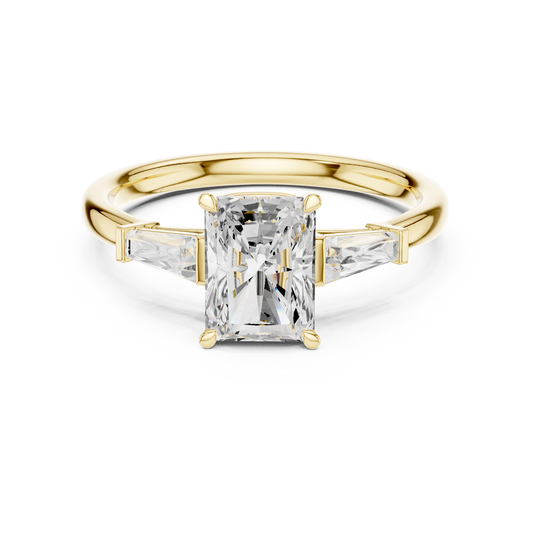
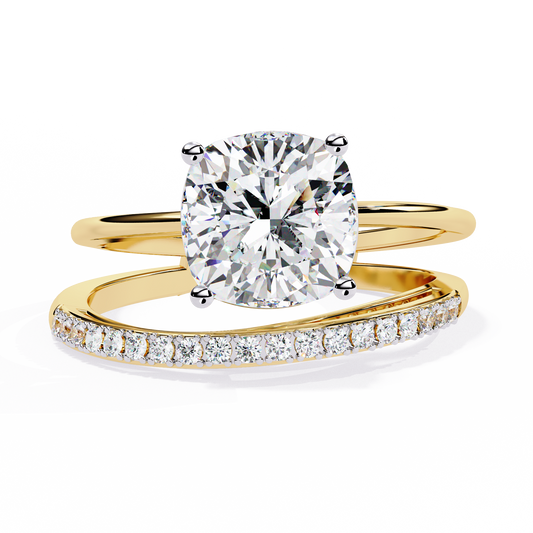
Most diamond shapes ask you to choose between brilliance and structure. Radiant cut engagement rings refuse the choice entirely. Born from an attempt to combine the fire of a round brilliant with the clean geometry of an emerald cut, this shape ended up carving out its own identity: sharp enough to feel modern, sparkly enough to feel classic.
What Makes the Radiant Cut Different
A radiant cut diamond engagement ring is built with trimmed corners and a crisscross faceting pattern that borrows from both round and step-cut traditions. That hybrid structure is exactly what gives radiant its signature look: the lively, scattered sparkle you'd expect from a brilliant cut, paired with straight edges that read more polished and deliberate than a fully rounded stone.
It's a shape that suits someone caught between two instincts, drawn to a round diamond's sparkle but wanting something with a bit more definition and edge.
Classic Versus Elongated Proportions
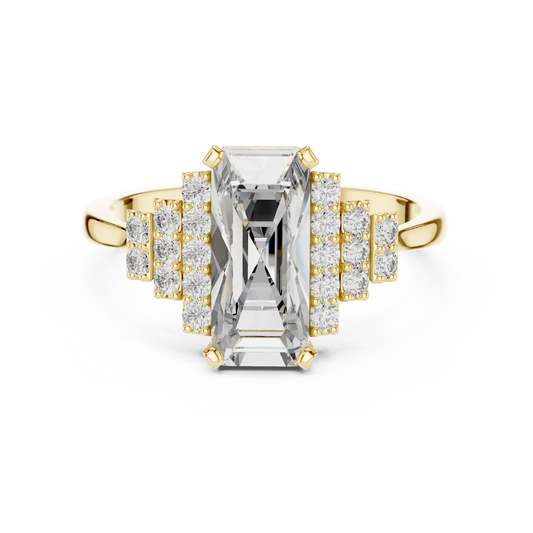
Radiant cut diamonds come in two general proportions, and the difference changes the ring's whole character. A classic radiant is close to square, giving a fuller, more compact look on the finger. Elongated radiant cut engagement rings stretch that same faceting into a rectangular silhouette instead, closer to a 1.3 to 1.5 length-to-width ratio, which lengthens the finger the way an oval or emerald cut does.
An elongated radiant cut engagement ring tends to suit someone who loves this shape's brilliance but wants a bit of that slimming, elongating effect too. Comparing the two proportions side by side usually makes the difference obvious in a way photos alone do not capture.
Setting Styles Worth Considering
Solitaire radiant cut engagement rings let the diamond's trimmed corners and crisscross brilliance stand fully on their own, with no distraction from the shape itself. Our current solitaire piece in this collection takes exactly that approach, tiered and understated, letting the stone's structure do the talking. Explore our full solitaire engagement ring collection if a cleaner pairing is what you are after.
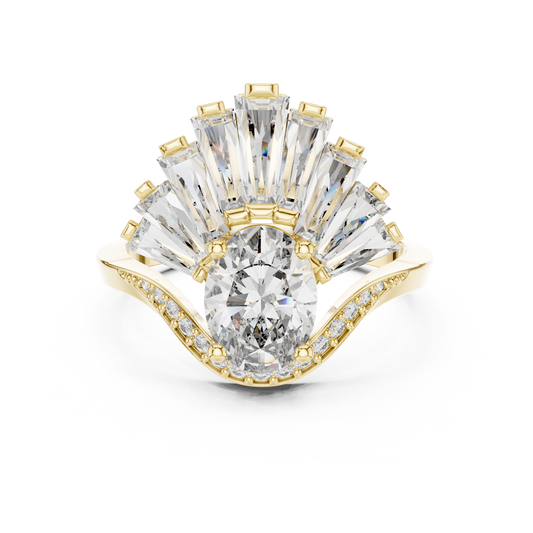
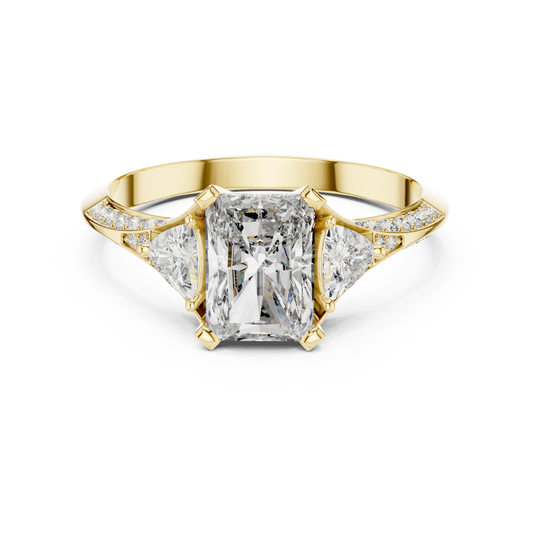
Three stone radiant cut engagement rings flank the center with smaller diamonds or tapered baguettes, extending the shape's clean lines down the finger while adding both brilliance and a bit of symbolic weight. This collection currently includes several variations on that build, including a trilogy design and a piece with tapered baguette side stones. Browse the three stone engagement rings collection to compare that pairing against other center shapes.
Radiant cut halo engagement rings are not currently part of this specific collection, but the pairing works especially well, since a ring of accent diamonds amplifies the radiant's already lively sparkle even further. Our halo engagement rings collection is worth a look for anyone drawn to that combination.
Metal Pairings
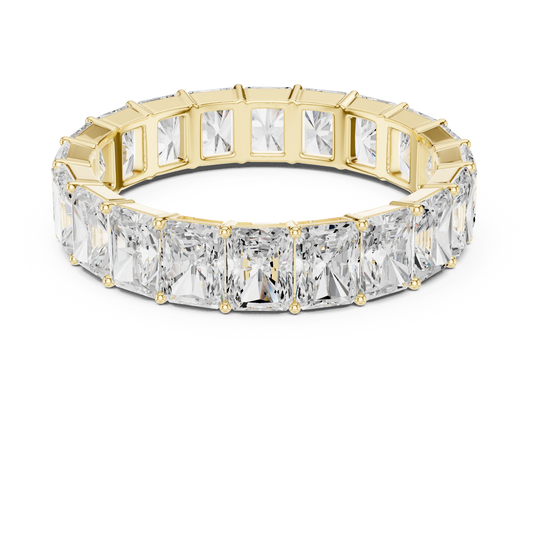
Gold radiant cut engagement rings in warm yellow tones soften the shape's crisp geometry slightly, giving the whole ring a warmer, more traditional finish that suits someone who already wears gold jewelry daily. White gold sharpens that same geometry further, letting radiant crisscross faceting read as bright and contemporary as possible. Rose gold offers a romantic middle ground, especially flattering paired with a pavé or eternity-style band. All three metals are available across this collection.
Comparing Radiant to Other Shapes
Set beside an emerald cut, a radiant cut offers noticeably more brilliance, while an emerald leans into a softer, more subtle shine. Set beside a round brilliant, a radiant cut looks more structured and defined thanks to its trimmed corners. And compared to the princess cut, the radiant cut trades sharp square corners for a slightly softer, more forgiving outline, a detail that also makes it a bit more resistant to chipping over years of wear.
What to Check Before You Buy
Cut quality and symmetry matter more here than carat weight alone, since a poorly proportioned radiant can look flat despite a solid size on paper. Clarity deserves attention too, since the open facets show inclusions more readily than a fully brilliant-cut round diamond would. A well-cut radiant, even at a modest carat weight, will consistently outshine a larger stone that's poorly proportioned.
FAQs
1. What is a radiant cut engagement ring?
A diamond with trimmed corners and a crisscross facet pattern that blends round brilliance with step-cut structure.
2. Do radiant cut diamonds sparkle more than emerald cut diamonds?
Yes. Radiant's faceting produces more scattered brilliance, while the emerald cut offers a softer, more subtle shine.
3. What's the difference between a classic and elongated radiant cut?
A classic radiant is close to square, while an elongated radiant stretches into a rectangular shape for a longer look on the finger.
4. Are radiant cut engagement rings good for daily wear?
Yes. Their trimmed corners lower the risk of chipping compared to sharply pointed shapes.
5. Can I get a radiant cut diamond in a halo setting?
Yes, "radiant" pairs well with "halo," and it's available through our halo collection even outside this specific shape page.
6. Are radiant cut diamonds more affordable than round diamonds?
Generally, yes. They often offer strong brilliance at a lower price point than a comparable round diamond.